



 Home /
 Which Bearings Are Suitable for Machine Tool Spindles?

Guide to Selecting Machine Tool Spindle Bearings: Types and Applications
Spindle bearings are critical components in CNC machine tools. Selecting different bearing configurations for a machine tool spindle directly impacts operational speed, load capacity, temperature rise, rigidity, and service life. There are five commonly used series for machine tool spindle bearings: tapered roller bearings, dual-direction thrust angular contact ball bearings, angular contact ball bearings, double-row cylindrical roller bearings, and deep groove ball bearings. Each type functions differently and suits specific machine tool applications. Below is a detailed breakdown of their features and characteristics.
Machine Tool Spindle Bearings
1. Tapered Roller Bearings
Tapered roller bearings handle simultaneous radial and axial loads, while double-row variants accommodate bidirectional axial loads. Due to sliding friction between the large end of the tapered roller and the inner ring rib, their limiting speed is typically lower than cylindrical roller bearings of the same size. However, hollow tapered roller bearings can utilize oil-cooled rollers to suppress temperature rise, thereby increasing allowable operating speeds. Because of their complex manufacturing process and high demands on machine lubrication systems, these bearings are generally reserved for horizontal spindles with specialized requirements.
2. Dual-Direction Thrust Angular Contact Ball Bearings
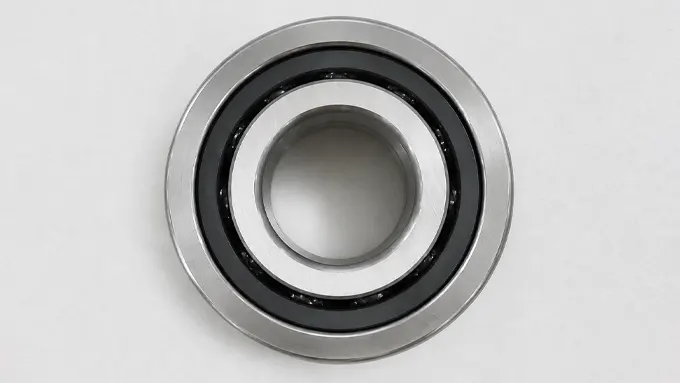
The 230000 type dual-direction thrust angular contact ball bearing with a 60° contact angle is commonly selected. It consists of one housing washer with lubrication holes, two shaft washers, one spacer, and two sets of steel ball and cage assemblies. Selecting the proper spacer height ensures the required preload is achieved after assembly. This type of spindle bearing supports bidirectional axial loads, offers excellent rigidity, maintains a low temperature rise under proper lubrication, and handles high speeds. It is easy to assemble and disassemble. As an innovative configuration, it is widely utilized in grinding machines, lathes, boring machines, milling machines, and drilling machine spindles, frequently paired alongside double-row cylindrical roller bearings.
3. Angular Contact Ball Bearings
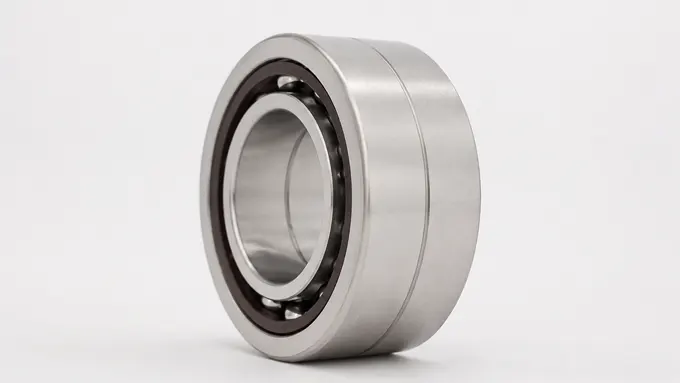
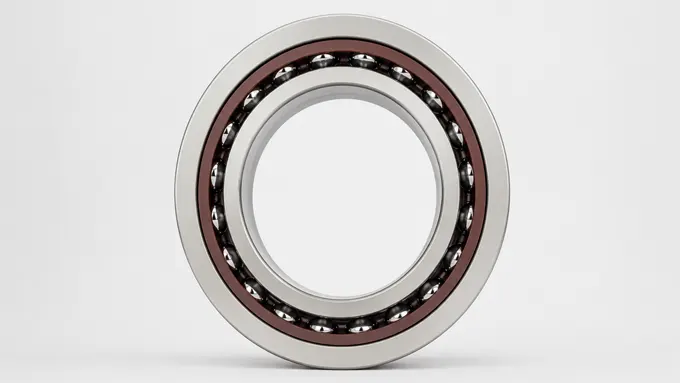
These bearings support combined radial and axial loads simultaneously. Because radial loads induce internal axial forces, they must be installed in paired configurations, such as "back-to-back," "face-to-face," "tandem," or "multiplex" arrangements. Spindle rigidity can be significantly enhanced via preloading. They are available in three contact angles: 15°, 25°, and 40°. Among them, the B7000CY high-precision angular contact ball bearing with a 15° contact angle is specially engineered for high-speed grinding machine spindles. Beyond its optimized internal geometry, its rings and rolling elements are manufactured from high-quality electroslag remelted (ESR) bearing steel. Paired with a phenolic laminated fabric tube cage and produced to precision tolerances of Class 5, 4, or 2, these bearings deliver high rotational precision, high limiting speeds, minimal friction, and low temperature rise.
4. Double-Row Cylindrical Roller Bearings
Engineered to handle substantial radial loads, these bearings also allow for high operational speeds. The two rows of rollers are arranged in a staggered pattern, which doubles the fluctuation frequency during rotation compared to single-row designs while reducing vibration amplitude by 70%. Two common series are widely utilized:
- NN30/W33 and NN30K/W33 Series: Feature ribs on the inner ring and a separable outer ring.
- NNU49/W33 and NNU49K/W33 Series: Feature ribs on the outer ring and a separable inner ring. The inner rings of the NN30K/W33 and NNU49K/W33 series have a tapered bore (1:12 taper) that matches the tapered journal of the spindle. Moving the inner ring axially expands it to reduce bearing clearance or achieve preloading. Cylindrical bore bearings are typically interference-fitted via hot assembly to minimize clearance or apply preload. For the NNU49 series with separable inner rings, finish machining of the raceway is generally performed after the inner ring is mounted to the spindle to secure maximum spindle rotational precision.
5. Deep Groove Ball Bearings
These bearings are generally utilized strictly for radial loads. Because their clearance is non-adjustable, they are typically deployed in applications with standard precision requirements where preloading is unnecessary, such as conventional drilling machine spindles.
Conclusion
Selecting the ideal machine tool spindle bearing depends entirely on your specific equipment requirements. Conventional drilling machine spindles can simply utilize deep groove ball bearings, whereas specialized horizontal spindles may require tapered roller bearings. Choosing the correct spindle bearing optimizes mechanical rotation support while minimizing friction.
Share on Social:


