


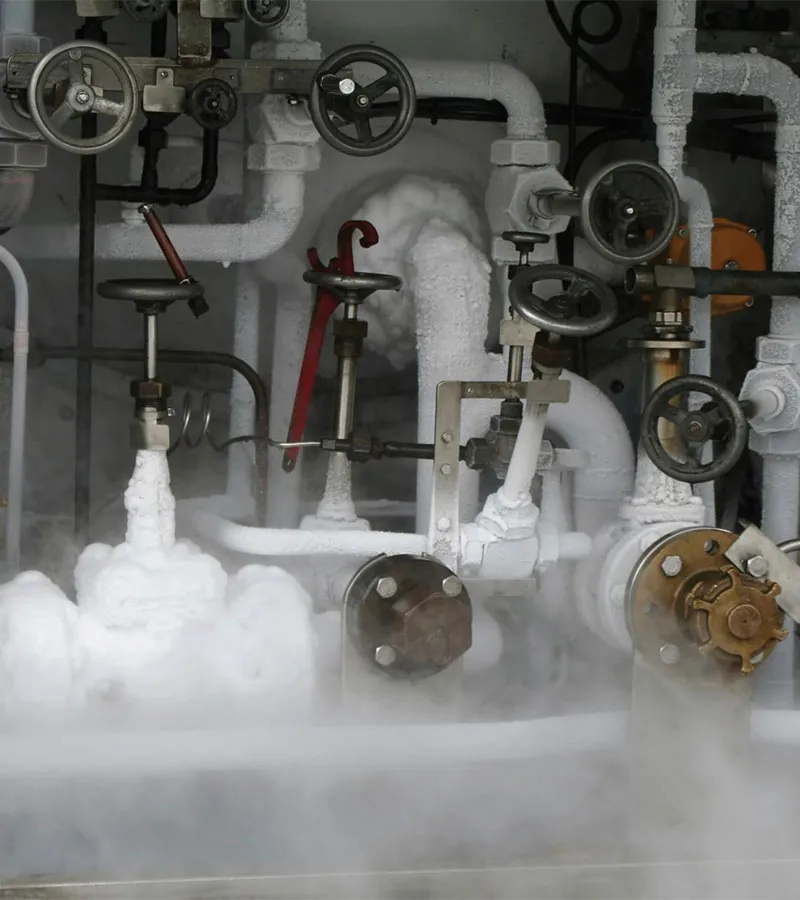
In modern industrial processing, most mechanical components are highly sensitive to extreme cold. Standard carbon steels and conventional bearing steels undergo drastic embrittlement when exposed to sub-zero temperatures, shattering under minimal impact. However, in sectors such as Liquefied Natural Gas (LNG), aerospace rocket propulsion (liquid hydrogen/liquid oxygen), cryogenic food processing, deep-sea exploration, and polar scientific instrumentation, mechanical systems must operate continuously and reliably in ultra-low and deep-freeze environments.
The critical components keeping this ultra-cold machinery rotating are cryogenic bearings. This guide provides an in-depth technical overview of cryogenic bearing technology and delivers actionable troubleshooting protocols for severe low-temperature failures.
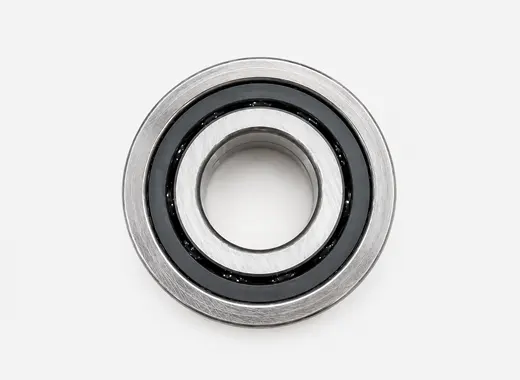
1. Core Engineering Essentials of Cryogenic Bearings
In engineering, operating conditions below -60°C are generally classified as low-temperature environments, while temperatures below -150°C (such as LNG at -162°C, liquid oxygen at -183°C, and liquid hydrogen at -253°C) fall under the category of cryogenic or deep-sea cryogenic conditions.
Why Standard Bearings Fail in Cryogenic Environments
- Low-Temperature Embrittlement (Cold Brittleness): Standard bearing steels (such as high-carbon chromium steel GCr15 / AISI 52100) experience a fundamental shift in their crystalline structure at sub-zero temperatures. Their impact toughness drops exponentially, leading to sudden, catastrophic brittle fracture.
- Lubricant Solidification: Conventional mineral-based greases and oils begin to thicken and solidify below -30°C, turning into a wax-like solid block. Instead of mitigating friction, the frozen lubricant acts as a severe brake, causing immediate motor overload and electrical burnout.
- Differential Thermal Contraction and Seizure: If the inner/outer rings, rolling elements, and cages are made of materials with mismatched coefficients of thermal expansion (CTE), they will contract at different rates in extreme cold. This collapses the internal bearing clearance, causing the assembly to seize completely.
Three Pillars of Cryogenic Bearing Material Technology
To maintain a fluid "mechanical waltz" in deep-freeze environments, cryogenic bearings rely on cutting-edge metallurgy and material composition:
- High-Nitrogen Stainless Steel Rings: Premium cryogenic bearings utilize high-alloy corrosion-resistant stainless steels (such as 9Cr18 / AISI 440C) or next-generation high-nitrogen steels (such as Cronidur 30 or X30CrMoN15-1). These steels undergo specialized cryogenic treatment during manufacturing to eliminate residual austenite, ensuring excellent dimensional stability and fracture toughness down to -253°C.
- Silicon Nitride (Si₃N₄) Ceramic Balls: This configuration establishes a hybrid ceramic bearing. Silicon nitride ceramic elements possess a coefficient of thermal expansion that is only 25% that of steel. They remain dimensionally inert during rapid thermal cycles, are significantly lighter, and exhibit an exceptionally low friction coefficient.
- Self-Lubricating Solid Cages: Traditional brass or standard polymers fail in cryogenic conditions. Cryogenic cages are engineered from engineered plastics like PTFE (Polytetrafluoroethylene), PEEK (Polyetheretherketone), or specialized fiber-reinforced phenolic laminates. These materials retain elasticity and toughness in extreme cold and transfer a microscopic self-lubricating solid film onto the raceway during rotation.
2. Cryogenic Bearing Failures: Causes & Troubleshooting Solutions
Because cryogenic bearings operate inside sealed, deep-freeze, and often inaccessible enclosures, diagnostic protocols must be highly precise:
Failure 1: Sudden Spike in Rotational Resistance (Excessive Startup Torque)
❓ Symptom: After sitting idle in a low-temperature state, the equipment fails to start up, or the motor draws a severe overcurrent accompanied by a strained "binding" sound from the bearing cavity.
🔍 Root Causes:
- Moisture Ingress and Icing (Most Common): External seals have degraded, allowing ambient humidity or moisture to enter the bearing chamber. In the cryogenic state, this moisture instantly crystallizes into ice, freezing the rolling elements to the raceways.
- Incorrect Low-Temperature Grease Selection: Standard grease was mistakenly applied, causing the lubricant to freeze solid.
💡 Solutions:
Implement a Strict Dry Nitrogen Purge: Prior to startup or following a maintenance cycle, the bearing cavity must be purged and pressurized with dry nitrogen gas (N₂) to completely evacuate ambient moisture.
Inspect peripheral sealing elements (such as lip seals or labyrinth seals) to ensure they have not hardened or cracked under the cold. Replace them with cryogenic-grade fluorosilicone or specialized PTFE seals.
If grease is mandatory, use an ultra-low temperature specialty grease formulated with a Perfluoropolyether (PFPE) base oil, rated for operations below -80°C.
Failure 2: Premature Ring Cracking (Brittle Fracture)
❓ Symptom: Inner/outer rings or the cage breaks suddenly under loads well below the bearing's rated fatigue limit and design capacity.
🔍 Root Causes:
- Excessive Thermal Stress (Rapid Chilling): The equipment was flooded with cryogenic media (e.g., liquid natural gas) while still at room temperature. This severe thermal shock generates massive internal thermal stresses between the inner and outer rings.
- Overtight Interference Fit: The initial fit on the shaft journal or in the housing bore was too tight at room temperature. Following cryogenic contraction, the shaft or housing exerts an unforeseen, destructive compressive or tensile force on the bearing rings.
💡 Solutions:
Enforce a Progressive Pre-Cooling Protocol: Before introducing liquid cryogenic media, the system must undergo a gradual, stepped pre-cooling phase utilizing gasified, low-temperature vapors to prevent destructive thermal shock.
When engineering machining tolerances, precisely calculate the thermal contraction rates of the bearing steel, shaft, and housing at the final operating temperature to ensure adequate cryogenic clearance remains.
Failure 3: Raceway Flaking and Cavitation Pitting
❓ Symptom: In submerged pumps where the fluid medium (such as LNG or liquid nitrogen) directly floods and lubricates the bearing, service life drops drastically. Disassembly reveals dense, microscopic honeycomb-like pitting across the raceway surface.
🔍 Root Causes:
Media Flashing and Cavitation: When the liquid medium flows through the high-speed rotating bearing, local velocities spike, dropping the localized static pressure below the fluid's vapor pressure. The liquid instantly flashes into microscopic vapor bubbles. As these bubbles travel into higher-pressure zones within the bearing, they collapse violently, generating micro-implosions (cavitation) that erode the steel raceways.
💡 Solutions:
Increase the system inlet pressure to boost the Net Positive Suction Head (NPSH), ensuring the liquid medium remains well above its vaporization threshold inside the bearing cavity.
Optimize the internal bearing geometry. Utilize cages with flow-optimization ports or transition to a full-complement (cageless) ball structure to smooth out fluid dynamics and minimize localized pressure drops.
3. Cryogenic Bearing Maintenance: The "Three No's" Ironclad Rules
| Maintenance Pillar | Technical Mandates & Operational Protocols |
| NO Bare-Hand Contacts | Bare hands transfer moisture, sweat, and body heat. When handling super-precision cryogenic bearings, residual hand sweat not only triggers microscopic corrosion but will instantly freeze into micro-ice crystals at sub-zero temperatures. Operators must wear lint-free, moisture-barrier anti-static or cryogenic assembly gloves. |
| NO Conventional Degreasers | Cleaning with standard motor oils or kerosene leaves a residual oil film that turns into a brittle, plastic-like crust under cryogenic temperatures, seizing rotation. Deep-freeze, dry-running bearings must be cleaned using highly volatile, residue-free anhydrous ethanol or specialized precision electronic solvent cleaners, followed by a dry nitrogen blow-dry. |
| NO Open-Air Storage | Cryogenic bearings are hypersensitive to water molecules. Once the vacuum packaging is breached, if installation is delayed, the bearings must be stored in sealed bags backfilled with dry nitrogen, or kept inside a vacuum desiccator chamber filled with silica gel to eliminate ambient moisture absorption. |