


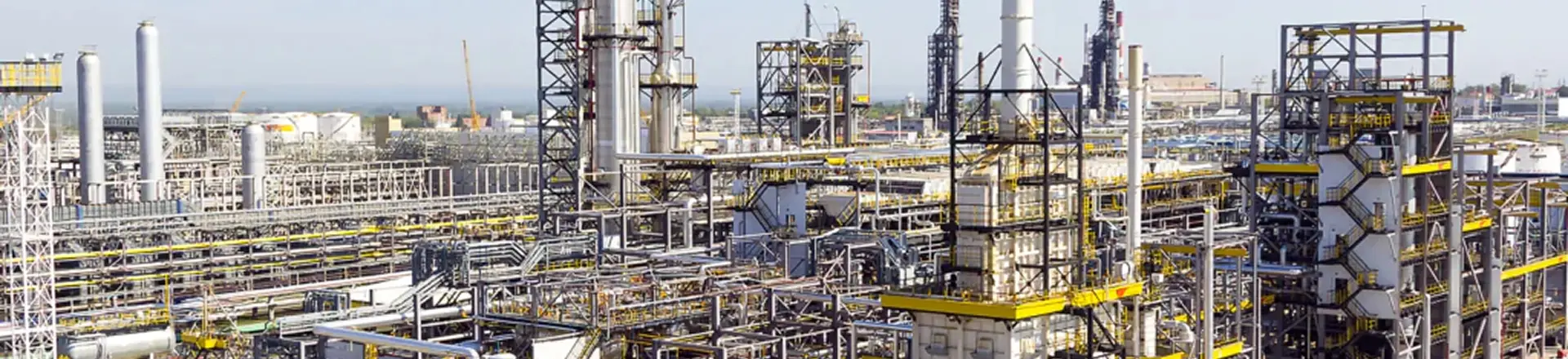
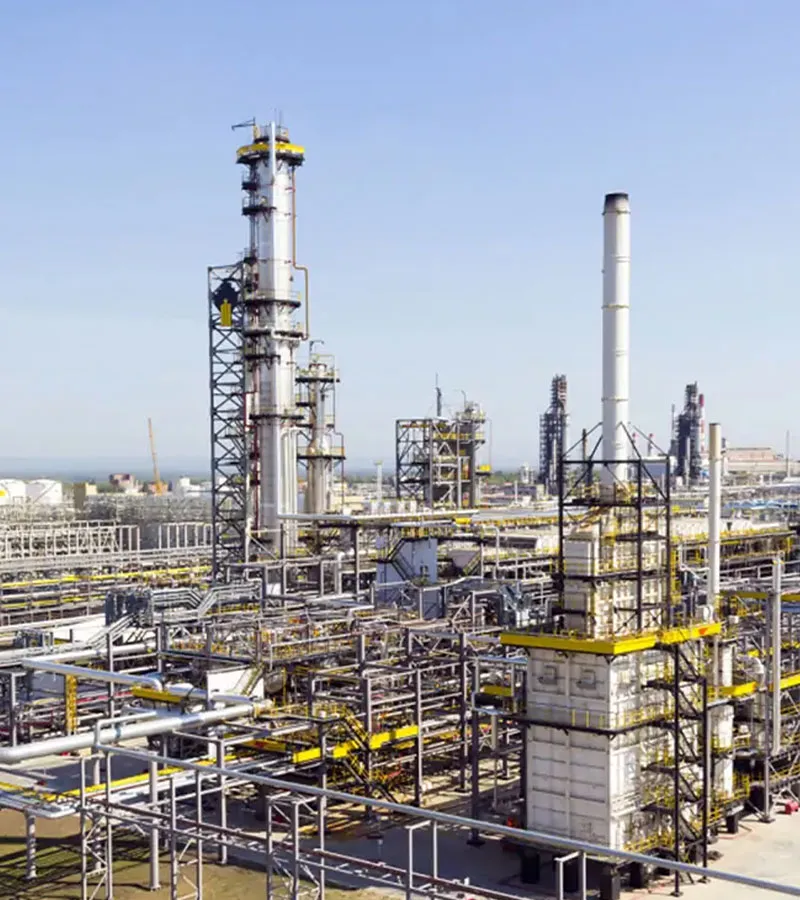

The exploration, extraction, processing, and long-distance transport (pipelines and storage) of oil and gas form the core of the upstream and midstream sectors of the Oil & Gas Industry. In this punishing environment, bearings are widely recognized as the "joints of critical machinery." Because they must withstand severe mechanical shocks thousands of meters beneath the earth's surface, extreme temperature differentials in polar or desert regions, highly corrosive gases like hydrogen sulfide (H₂S), high-pressure flammable media, and cryogenic deep-freeze environments, their technical barriers and safety requirements far exceed those of conventional industrial bearings.
Bearings engineered for oil, gas, and related energy transmission are highly specialized and categorized based on their specific position within the supply chain and their respective extreme operating conditions:
1. Upstream Bearings: Exploration, Drilling & Production (Heavy Loads, Severe Shock, Anti-Contamination)
Drilling and extraction equipment interface directly with geological formations, exposing components to heavy mechanical shocks and abrasive mud ingress. The core engineering focus for these bearings centers on extreme load-carrying capacity and absolute sealing integrity.
Top Drive System (TDS) Bearings
- The Challenge: A top drive system must suspend and rotate drill strings that are thousands of meters long and weigh hundreds of tons, subjecting the assembly to immense axial thrust and gravitational loads.
- Core Bearing Solution: Tapered Thrust Bearings. These are typically manufactured from premium case-hardened steel. This metallurgy creates a "hard-case, tough-core" structure, allowing the bearing to absorb violent jar-drilling shocks without fracturing from fatigue.
Mud Pump Bearings
- The Challenge: Mud pumps are responsible for circulating drilling mud under extreme pressures, a fluid that is highly abrasive and packed with particulates.
- Core Bearing Solution: Large-scale, multi-row, or tandem Cylindrical Roller Bearings. To counter an environment saturated with sand and rock fragments, these bearings feature proprietary, robust seal designs and require ultra-pure steel chemistry to prevent microscopic debris from causing premature spalling.
Pumpjack Bearings (Motor & Gearbox Components)
- The Challenge: Commonly known as "nodding donkeys," pumpjacks operate continuously outdoors in harsh weather conditions, enduring alternating radial and axial loads.
- Core Bearing Solution: Spherical Roller Bearings. These bearings inherently compensate for shaft misalignment or angular deflection caused by foundation warping or installation tolerances, ensuring uninterrupted, long-term operation.
2. Midstream Bearings: Pipeline Transmissions & Natural Gas Compression (High Speeds, Long Service Life, Oil-Free Operations)
The primary goal of the midstream sector is to guarantee uninterrupted energy transport across thousands of miles of pipelines. Pipeline compressors and pumping stations require high-speed machinery running 24/7/365.
Centrifugal Pipeline Compressors & Large Gas Turbines
- The Challenge: Traditional rolling-element bearings suffer from drastically shortened fatigue lives when subjected to continuous ultra-high-speed operations. Furthermore, oil-lubricated setups present a risk of lubricating oil leaking and contaminating the gas medium.
- Core Bearing Solution: Tilt Pad Journal Bearings. These hydrodynamic bearings support the shaft on a pressurized oil film. The individual pads pivot dynamically to self-adjust with shifting rotational speeds, completely eliminating high-speed "oil film whip" or instability.
- Advanced Technological Trend: Active Magnetic Bearings (AMB). AMBs utilize controlled electromagnetic forces to levitate the rotor completely, achieving zero mechanical contact, zero wear, and an entirely oil-free system. This completely eliminates fire hazards associated with lubricating oils and vastly extends the maintenance-free service life of smart pipeline compressors.
Crude Oil Export Pumps & Pipeline Booster Pumps
- The Challenge: These process pumps must strictly adhere to the API 610 standard enforced by the American Petroleum Institute.
- Core Bearing Solution: High-precision, universally matched Angular Contact Ball Bearings, typically paired with machined solid brass cages to deliver exceptional control over thermal expansion and high axial thrust loads.
3. Specialized Energy Transport: LNG & Cryogenic Storage Bearings (Ultra-Low Temperature, Self-Lubricating)
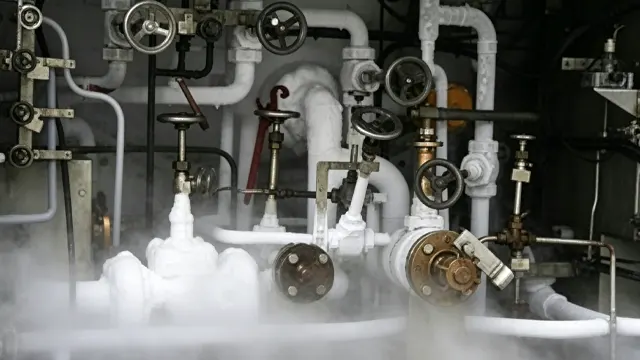
When natural gas is liquefied into LNG at -162°C for marine vessel or tanker transport, conventional oil lubrication fails entirely, as standard oils and greases solidify into wax-like blocks below -30°C.
LNG Submerged Motor Pumps & Cargo Discharge Pumps
📌 The Challenge: The bearings operate completely submerged inside the -162°C liquid natural gas stream.
⚙️ Core Bearing Solution: Hybrid Ceramic Angular Contact Ball Bearings.
⭐ Technical Engineering Features:
- High-Nitrogen Stainless Steel Rings: The inner and outer rings are forged from specialized corrosion-resistant high-nitrogen stainless steels (such as Cronidur 30 or X30CrMoN15-1), undergoing extensive cryogenic treatment to guarantee absolute dimensional stability at deep-freeze temperatures.
- Silicon Nitride (Si3N4) Ceramic Balls: The rolling elements have a coefficient of thermal expansion that is only 25% that of steel. They prevent cold-welding against the steel raceways during unlubricated startup phases.
- Self-Lubricating Cages: Cages are machined from advanced engineering polymers like PEEK (Polyetheretherketone) or PTFE (Polyethelene). They provide reliable self-lubrication while utilizing the surrounding LNG fluid to dissipate localized frictional heat.